The Role of Indigenous Communities in Opposing Oil and Gas Extraction on Traditional Lands

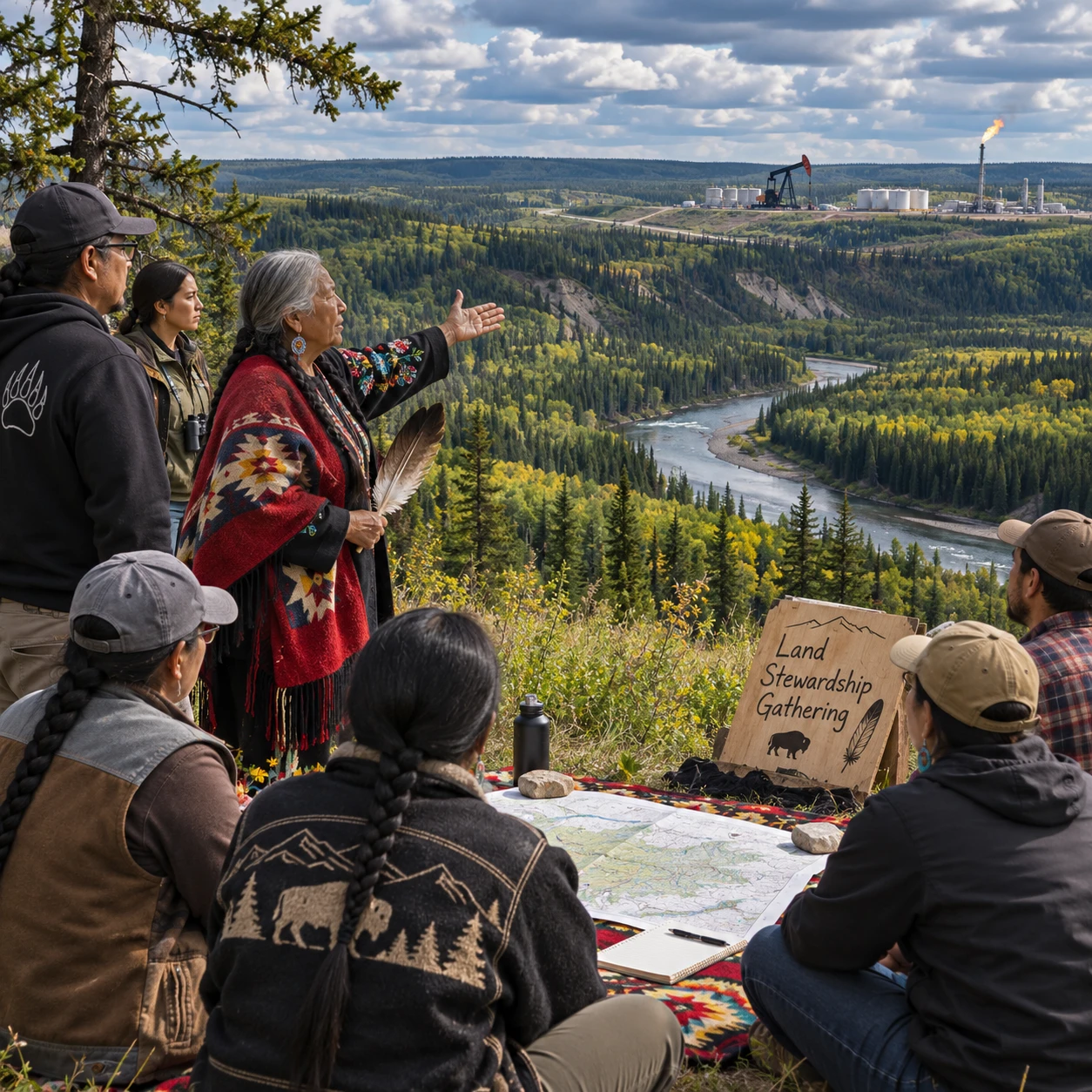
Across Alberta, Indigenous Nations and communities are making decisions about oil and gas activity on lands and waters connected to their histories, responsibilities, and futures. Some oppose particular projects or forms of extraction; others take different positions or weigh economic opportunities alongside environmental and cultural concerns. Their perspectives are diverse, and their leadership matters because resource decisions affect more than the project footprint.
Understanding Indigenous-led opposition means looking at traditional lands, Treaty rights, sovereignty, consultation, and stewardship together. It also means recognizing that non-Indigenous residents can support community-led campaigns without taking over the conversation or assuming every Nation shares the same view.
Why traditional lands matter
Traditional lands matter because they sustain cultural relationships, community life, and ecosystems across generations. For many Indigenous peoples, land and water are not simply resources or property; they are part of enduring responsibilities, knowledge, identity, and relationships.
Traditional territories may include places used for harvesting, travel, ceremony, teaching, and caring for plants and animals. These connections can continue regardless of whether a boundary is formally recognized or a person lives on the land today. A proposed well, pipeline, access road, or other oil and gas infrastructure may therefore raise concerns beyond the area directly cleared or disturbed.
Land stewardship can involve passing on knowledge, caring for watersheds, monitoring wildlife, and maintaining access to culturally important places. Each community defines its own priorities and responsibilities. In Alberta, where oil and gas development overlaps with forests, wetlands, rivers, and Indigenous territories, those priorities can shape how a project is assessed and whether a community supports it.
Opposition may arise when people believe a project threatens places or relationships that cannot be replaced, or when cumulative activity has already placed pressure on the land. That concern should not be reduced to a simple pro-development or anti-development label. It reflects a community’s own understanding of its obligations and choices.
Rights, consent, and decision-making
Indigenous rights and decision-making are central to resource debates, but the legal context depends on the specific Nation, rights, agreements, and project. Meaningful consultation is a legal and procedural obligation in relevant circumstances; it does not automatically mean that a community has given consent.
In Alberta, Treaty rights and other constitutionally protected Indigenous rights may be relevant to decisions about land and resource use. The Constitution Act, 1982 recognizes and affirms existing Aboriginal and Treaty rights in section 35. How a particular right applies, and what consultation or accommodation is required, depends on the facts and applicable law. It is best not to treat any single project dispute as a universal rule.
Free, prior, and informed consent is an important principle in the United Nations Declaration on the Rights of Indigenous Peoples. In practice, communities may invoke consent when explaining what legitimate decision-making should require. Consultation and consent are related, but they are not interchangeable: consultation is a process, while consent concerns whether a community agrees to a proposed action. Legal duties and standards can differ by context.
For consultation to be meaningful, it needs to happen early enough to influence decisions, provide understandable and relevant information, and allow time for a community’s own governance and deliberation. A meeting or information package alone does not establish that community concerns have been addressed. Indigenous sovereignty and self-determination also mean that each Nation must be able to set its priorities through its own institutions and processes.
How communities challenge extraction
Indigenous communities may challenge oil and gas extraction through public advocacy, legal processes, environmental monitoring, education, and direct engagement with governments or companies. The approach varies by Nation and situation; there is no single Indigenous response to development.
Some communities make formal submissions during environmental assessment or regulatory reviews, identify gaps in project information, or seek changes to proposed conditions. Others use court proceedings to address questions about rights, consultation, permits, or project decisions. Legal action can be costly and time-consuming, and its outcome depends on the evidence and law in each case.
Indigenous-led advocacy may also include community meetings, public statements, cultural and educational events, campaigns, or partnerships with environmental organizations. Where communities conduct land or water monitoring, their observations and knowledge can inform their own decision-making and, where they choose, broader public discussions. Their knowledge should not be extracted or shared without permission.
Direct engagement can include negotiating with a company or government, requesting project changes, or documenting concerns through community-led processes. Some Nations may support certain projects or pursue economic participation while opposing others. Agency includes the right to choose, and outside observers should avoid treating one community’s strategy as a template for all.
Potential impacts of oil and gas operations
Oil and gas operations can affect land, water, wildlife, cultural use, and community wellbeing, although the nature and scale of impacts vary by project and location. Indigenous communities may assess both direct effects and the combined pressures of existing and proposed development.
Exploration and production can require roads, well pads, pipelines, facilities, and associated activity. These may change habitat, fragment landscapes, affect wildlife movement, or alter access to harvesting areas. Water concerns may include withdrawals, spills, waste management, or effects on watersheds; the relevant risks depend on the project design, safeguards, and local conditions.
People may also raise concerns about noise, traffic, air quality, safety, or disruptions to community use of land. Cultural effects can be difficult to measure in a conventional environmental assessment. A place can matter because of its history, teachings, or ongoing use, even when that value does not appear on a standard map or can be replaced through mitigation.
These concerns should be discussed carefully rather than presented as guaranteed outcomes for every operation. Project-specific evidence, community knowledge, monitoring, and transparent assessment all matter. A decision made today can also shape what remains available to future generations, which is why cumulative effects and long-term stewardship often feature in Indigenous-led perspectives.
Why Indigenous leadership matters to Alberta’s environmental movement
Indigenous leadership strengthens Alberta’s environmental movement by bringing community-defined priorities, rights, and long-term relationships with land into public debate. It can also reveal questions that a project-focused review might otherwise overlook.
Indigenous Nations are rights-holders with distinct histories and governments, not simply another interest group. Their views deserve attention on their own terms. When Indigenous-led campaigns overlap with broader public opposition to oil and gas operations, that overlap can help build awareness or solidarity, but it does not erase differences in goals and responsibilities.
Non-Indigenous groups may focus on emissions, biodiversity, or climate policy. A Nation may also be concerned with Treaty rights, access to a particular territory, cultural continuity, or the authority to make decisions. These priorities can align, but they are not identical. Indigenous leadership must remain Indigenous-led, including the right to define the campaign’s message, strategy, and desired outcome.
That distinction makes solidarity more credible. It asks environmental organizations and residents to follow the direction set by the community rather than using Indigenous voices as proof for a campaign they control.
How allies can offer meaningful support
Allies can support Indigenous-led opposition by listening first, following community guidance, and sharing only information the community has authorized for public use. Respectful support is practical, consistent, and accountable to the people leading the work.
- Learn from the Nation’s own sources. Read its public statements and materials before repeating claims about a project or its position.
- Ask what support is wanted. A community may welcome attendance, donations, volunteer help, or amplification, or it may prefer a different form of solidarity.
- Share messages accurately. Link to authorized statements, preserve context, and do not present one person as speaking for an entire Nation.
- Respect boundaries and protocols. Do not publish sensitive locations, photographs, stories, or Indigenous knowledge without permission.
- Keep showing up. Support can include attending public events when invited, making submissions, contacting elected representatives, and staying engaged after media attention fades.
Good intentions do not guarantee useful support. Avoid speaking on behalf of a community, pressuring it to adopt a particular tactic, or treating its members as symbols in a wider campaign. If the right action is unclear, ask through the channels the community makes available and accept its answer.
Frequently asked questions
What does meaningful consultation involve?
Meaningful consultation generally requires an open, timely process in which relevant information is shared and concerns can influence decision-making. The specific legal duties vary with the rights and circumstances involved; a single meeting does not necessarily meet them.
Are all Indigenous communities opposed to oil and gas development?
No. Indigenous communities and Nations are diverse, and positions can differ between communities, projects, and over time. Some oppose particular operations, while others may support certain forms of development, negotiate conditions, or take a mixed approach.
How can residents support Indigenous-led campaigns respectfully?
Listen to the community leading the campaign, follow its requests, share authorized information, and avoid speaking for its members. Support should strengthen community priorities rather than redirect them.
What is the difference between consultation and consent?
Consultation is a process for engaging with affected Indigenous rights-holders and considering their concerns. Consent means agreement. The two concepts are related but not the same, and the applicable legal requirements depend on the context.