How Citizen Opposition Movements Have Shaped Alberta’s Energy Policies Over the Decades

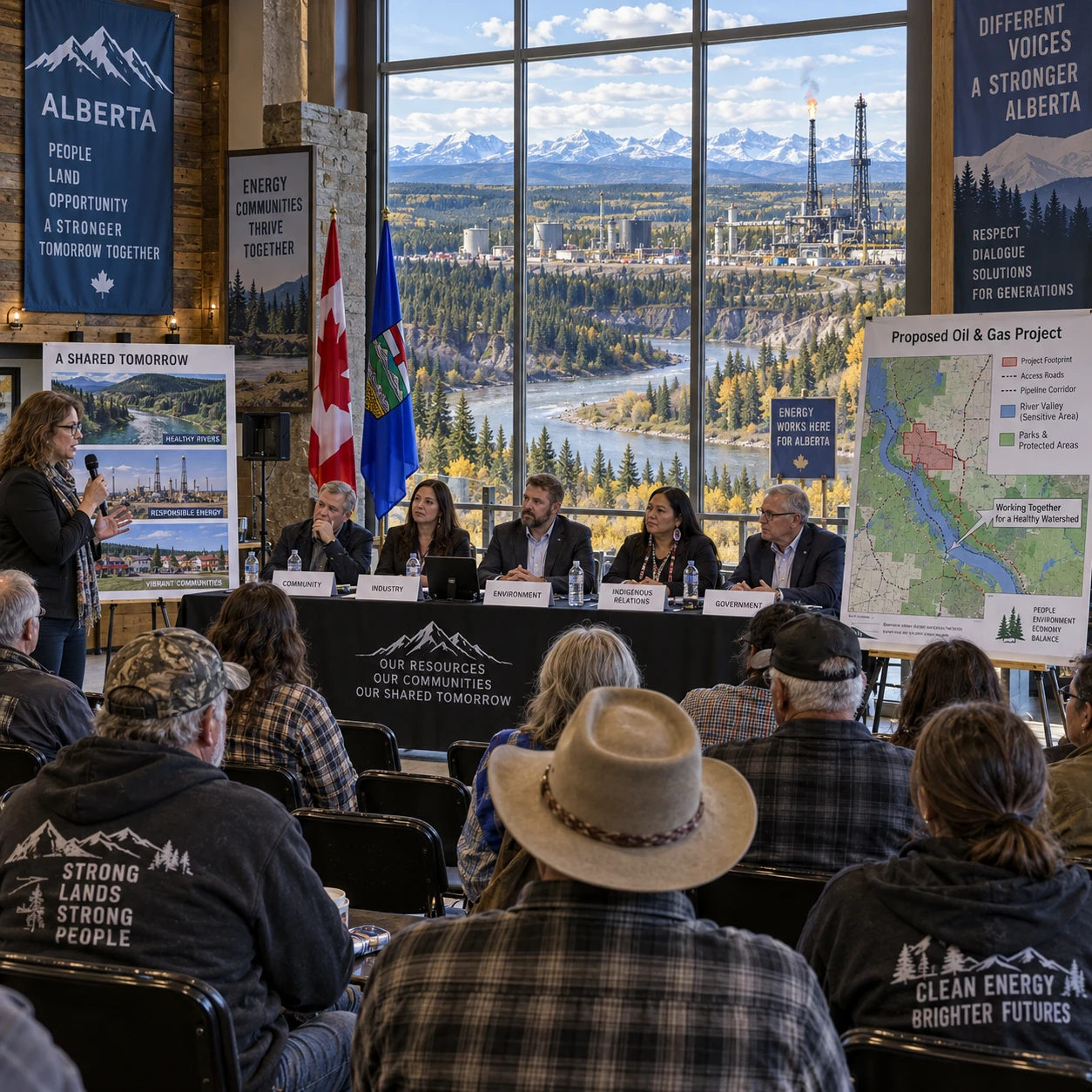
Alberta’s oil and gas industry has long shaped its economy, communities, and public debates. Over the decades, citizen opposition movements have challenged particular projects and questioned how the province balances energy development with environmental protection, local rights, and public accountability.
Their influence is real but rarely straightforward. Petitions, protests, public hearings, Indigenous-led advocacy, and legal submissions can put issues on the record or prompt scrutiny. They do not, by themselves, prove that a policy changed because of public pressure. Alberta’s energy rules have also been shaped by governments, regulators, courts, industry, market conditions, and federal decisions.
Alberta’s energy landscape and the rise of public opposition
Citizen opposition grew as oil and gas development expanded across Alberta and its effects became more visible in nearby communities. Residents organized around concerns such as land disturbance, air quality, water use, and whether project decisions gave affected people a meaningful voice.
Alberta’s energy landscape includes conventional oil and gas fields, pipelines, coal and gas power generation, and the oil sands, whose major development accelerated in the late twentieth century. The sector brings jobs, public revenue, and infrastructure, while operations can also affect ecosystems, land use, and communities. Those impacts vary by project and location.
Public concern did not emerge as one province-wide movement with a single position. Local residents, farmers, environmental organizations, health advocates, and Indigenous communities have raised different issues and pursued different goals. A proposed well near a home, a pipeline route across farmland, and oil sands development near a watershed can each create distinct debates.
As development spread, people increasingly sought ways to influence decisions made beyond their immediate communities. They asked who assessed environmental impacts, how consultation worked, and whether regulators considered cumulative effects rather than reviewing each project in isolation. These questions helped make public participation and environmental assessment central points of contention in Alberta energy policy.
From local concern to organized campaigns
Residents and advocacy groups have moved from raising local concerns to organizing public campaigns, using education, petitions, demonstrations, and regulatory or legal channels to seek attention and influence decisions.
In the 1970s and 1980s, energy debates were shaped by the rapid expansion of petroleum development and disputes over provincial control, resource revenue, and environmental oversight. In later decades, opposition often focused more directly on the impacts of specific projects and the adequacy of their approvals. Groups such as the Pembina Institute, founded in 1985, contributed research and public education to debates about energy and the environment; local organizations and informal coalitions also formed around particular proposals.
Campaigns can use several methods, often in combination:
- Public education: Share project maps, technical reports, and accessible explanations of potential effects.
- Petitions and demonstrations: Show visible concern and ask elected officials or companies to respond.
- Regulatory participation: Submit written evidence or seek standing at a hearing when the process allows it.
- Legal action: Ask courts to review whether statutory, constitutional, or procedural duties were met.
- Coalition-building: Connect residents, researchers, landowners, and Indigenous rights-holders where their concerns align.
Each route has limits. A petition can demonstrate support, but it is not a substitute for technical evidence in a regulatory process. A legal case may clarify a duty or procedure, but it can be costly and does not automatically stop a project. Effective grassroots advocacy often pairs public communication with careful documentation and a clear understanding of which decision-maker has authority.
Policy pressure points: hearings, assessments, and approvals
Public hearings, environmental assessment, and regulatory approvals give citizens formal routes to raise concerns, although the scope and impact of participation depend on the rules for each decision.
Alberta’s energy regulator reviews many oil and gas applications under provincial laws and processes. Depending on the project, an application may involve technical review, public notice, consultation requirements, or a hearing. A hearing can bring evidence from applicants, interveners, and other participants into a formal record. It does not mean every resident automatically has standing or that the regulator must follow public opinion.
Environmental assessment can examine likely effects on water, wildlife, air, land, and communities. Public submissions may identify local information that is missing from a project file, such as seasonal water conditions or the combined pressure of several nearby developments. Residents can make their input more useful by referring to a specific project, documenting observed conditions, and connecting concerns to a question within the regulator’s authority.
Public participation has also prompted debate about the design of review systems: who qualifies to participate, what evidence counts, and whether cumulative effects receive enough attention. Those are policy pressure points, but the existence of debate does not establish that citizen campaigns caused a particular regulatory rule. To understand the outcome, it helps to distinguish public influence—raising issues, building scrutiny, or affecting a decision’s record—from a demonstrated change in law or policy.
Residents looking for current participation instructions can consult the Alberta Energy Regulator, which publishes information about applications, hearings, and regulatory processes. Timelines and eligibility can differ, so check the notice for the specific project rather than relying on general assumptions.
Indigenous rights, land, and water at the centre of debate
Indigenous rights and community advocacy are central to many Alberta energy debates, especially where projects may affect Treaty rights, traditional land use, water, or culturally significant places.
First Nations are not a single interest group, and Indigenous communities do not hold one shared view of energy development. Communities may oppose a project, support it under certain conditions, negotiate benefits, or hold differing views internally. Their positions should be understood on their own terms, including the distinct rights and histories of each Nation.
Under Canadian law, the Crown has a duty to consult Indigenous peoples when contemplated conduct may adversely affect asserted or established Aboriginal or Treaty rights. The depth of consultation depends on the circumstances, and accommodation may be required where appropriate. Consultation is a legal process; it is not the same as general public engagement, nor does it guarantee agreement or a particular project outcome.
Land and water concerns often connect local residents and Indigenous rights-holders, though their interests and legal standing may differ. A community may document pressure on a watershed, while a First Nation may also raise effects on fishing, hunting, cultural practices, or Treaty rights. Stronger assessments can depend on credible local knowledge and meaningful opportunities to provide it. The challenge is ensuring that information is considered early enough to matter, rather than collected after key choices have already been made.
What citizen movements have—and have not—changed
Citizen movements have helped shape Alberta’s energy debate by raising issues, increasing scrutiny, and pressing institutions to explain decisions, but their direct effect on individual policies is difficult to isolate.
Campaigns can make a project’s local effects visible to a wider audience, bring new evidence into hearings, and keep environmental assessment or land-use questions on the public agenda. Sustained attention may encourage governments and regulators to clarify procedures or improve how information is shared. These are meaningful forms of influence, even when a project proceeds.
At the same time, Alberta’s energy policy reflects competing pressures: employment and public revenue, investor decisions, legal obligations, energy demand, environmental commitments, and political priorities. Governments can change regulations, revise climate plans, or approve infrastructure despite opposition. A campaign’s success should therefore be judged against its stated aim, not only by whether it stopped a project.
A useful way to assess claims is to ask three questions: What changed? Was it a law, approval condition, project design, public debate, or only the level of awareness? Who made the decision? Was it a regulator, provincial government, court, company, or another authority? What evidence links the campaign to the outcome? This distinction avoids both overstating activist victories and overlooking quieter effects on scrutiny and accountability.
The current landscape and continuing challenges
Today, Alberta residents continue to challenge or question oil and gas operations through project-specific advocacy, regulatory participation, and broader debates about climate, land, water, and energy transition.
Current disputes can involve new wells and pipelines as well as the cumulative effects of existing development, reclamation, emissions, and the long-term use of land and water. Communities may also face uncertainty about project timelines, access to technical information, and how to participate effectively. The rules are not identical across projects, so checking the relevant notice and regulator’s guidance is an essential first step.
Residents considering action can use a practical sequence:
- Identify the project, responsible company, decision-maker, and applicable approval process.
- Read the application or public notice and note deadlines, participation criteria, and the issues under review.
- Document concerns with specific locations, dates, observations, and relevant technical or community knowledge.
- Coordinate respectfully with neighbours and, where appropriate, Indigenous rights-holders, while recognizing distinct rights and perspectives.
- Track the decision and its conditions, then compare the result with the concerns raised.
The main challenge is keeping participation meaningful in decisions that are technical, time-limited, and shaped by broader economic and political forces. Citizen opposition movements have not controlled Alberta’s energy policy, but over decades they have helped determine which questions decision-makers must confront—and how closely the public watches the answers.